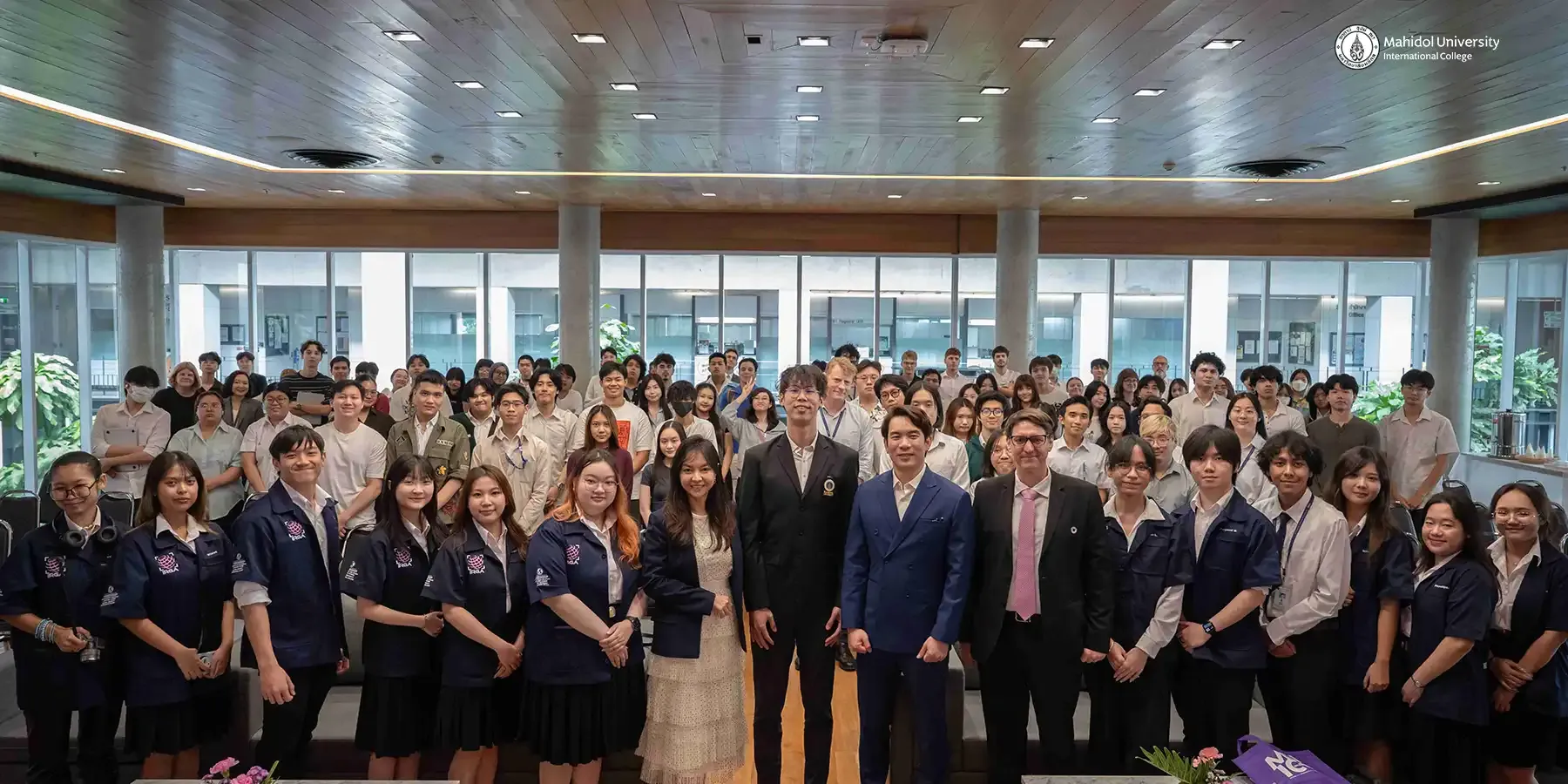



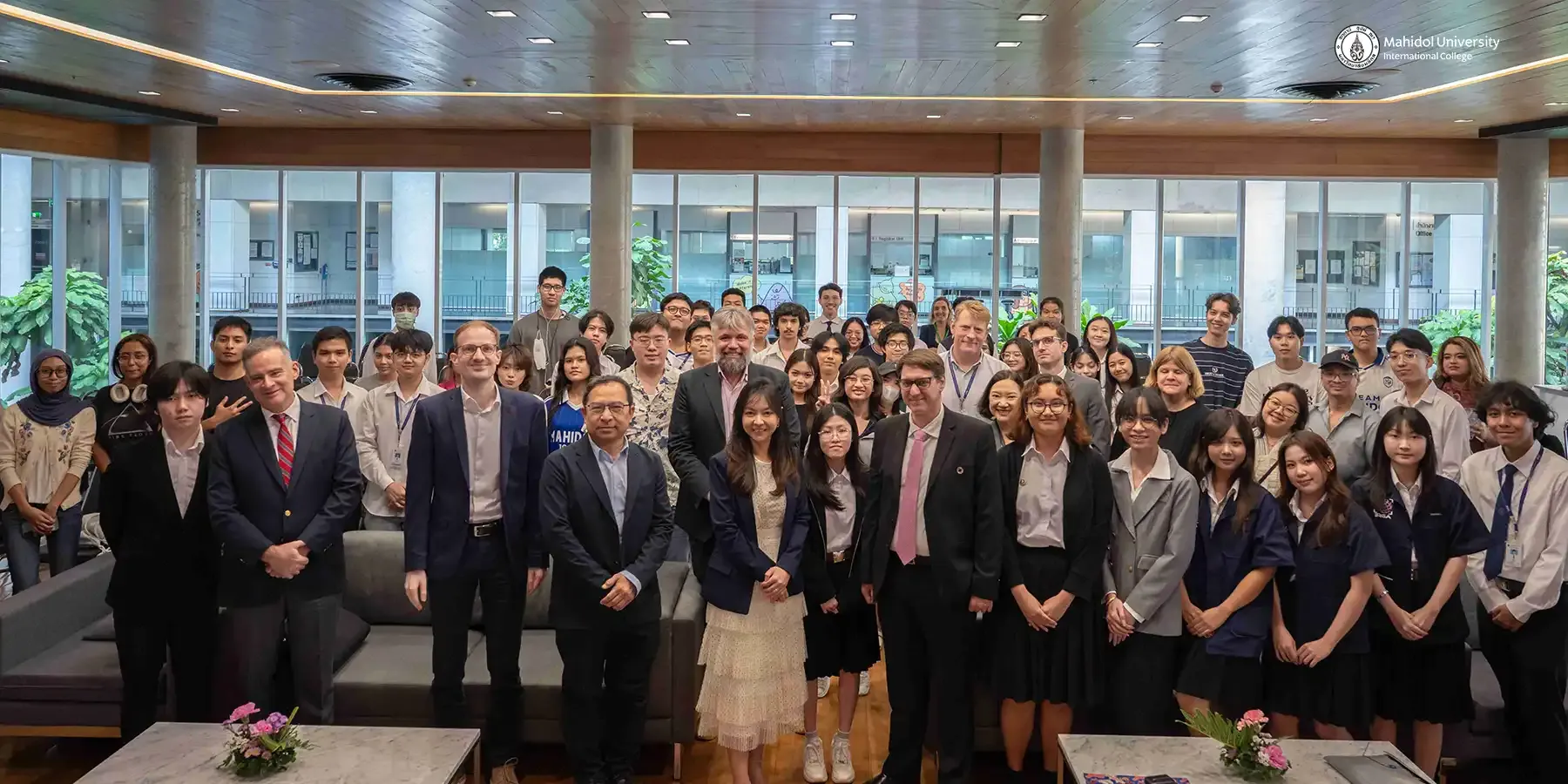
Experts in cybersecurity, sustainability, social justice, soft power, and finance convened at Mahidol University International College (MUIC) for the annual International Relations and Global Affairs (IRGA) Festival on February 24–25, 2026, at the Aditayathorn Building. The event, themed around navigating a world “on the cusp of chaos,” focused on transforming global crises into opportunities for policy and innovation.
In his opening address, Mr. Christian Oesterheld, Social Science Division Chair, invoked philosopher Friedrich Nietzsche, framing chaos as the “raw material of creation” needed to “give birth to a dancing star.” This set the stage for two days of intense discussions aimed at mapping, understanding, and finding order within contemporary global challenges.
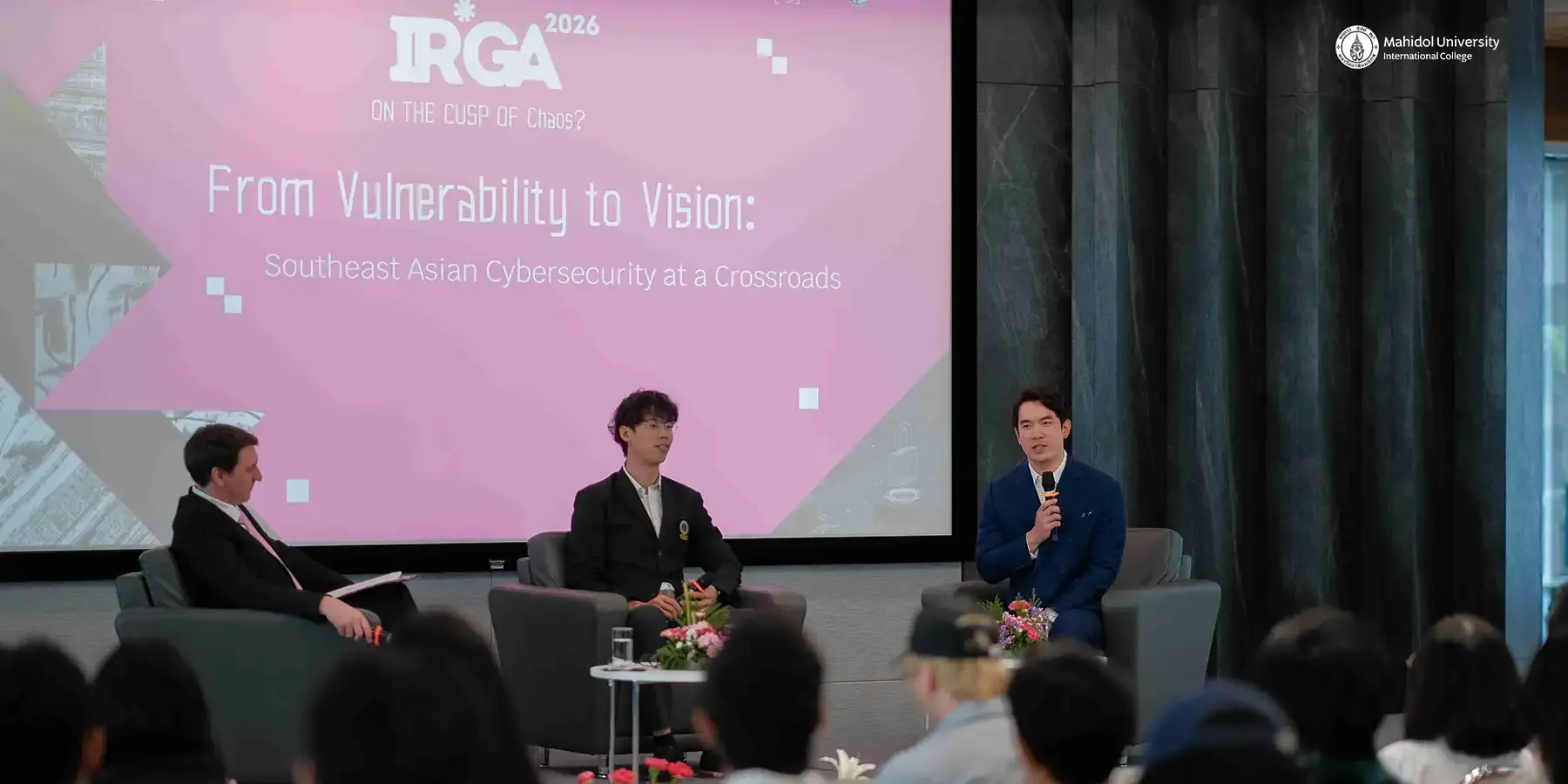
A panel on cybersecurity, “From Vulnerability to Vision: Southeast Asian Cybersecurity at a Crossroads,” featured Mr. Tatiyarerg Chaisinlapa of Security Pitch and Asst. Prof. Dr. Songpon Teerakanok of MUIC’s Science Division. They detailed how Southeast Asia’s rapid digitalization has fueled cybercrime, stressing the need for stronger regional cooperation and digital literacy.
Another session, “Culture Remixed,” explored Thailand’s soft power with speakers M.R. Chalermchatri Yukol, a noted Thai film director; Mr. Panidone Pachimsawat, Deputy Director-General of the Department of Information, Ministry of Foreign Affairs; and Ms. Pavarisar Vijitakula, Saan Lab’s head of Thailand operations. They discussed how blending heritage with creative industries can serve as a key diplomatic tool.
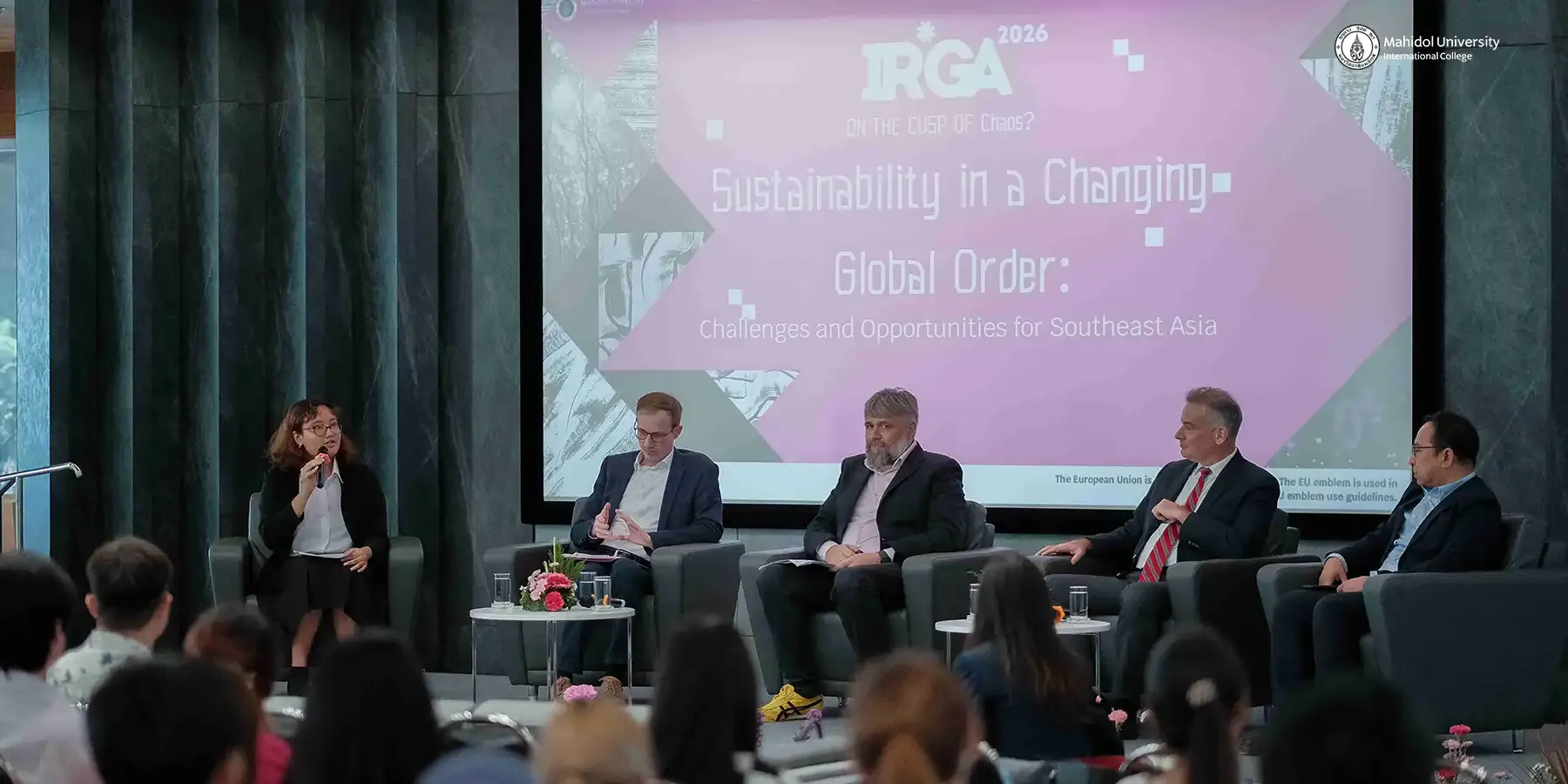
A landmark sustainability panel, “Sustainability in a Changing Global Order,” co-organized with Thammasat University’s German‑Southeast Asian Center of Excellence for Public Policy and Good Governance (CPG), included four experts. Mr. Lucas Meier, CPG Program Manager, outlined how compliance is becoming a geopolitical tool. Dr. Michael Bucki, EU Counsellor for Sustainability, Agriculture and Health for Thailand and ASEAN, explained how regulations are reshaping global value chains. Mr. Steve Rynecki, Senior VP of the Keystone Group, highlighted the need for SMEs to adopt measurable ESG systems. Finally, Khun Tara Buakamsri, Co‑founder of Greenpeace Southeast Asia, raised alarms about transboundary pollution from rare‑earth mining in Myanmar.
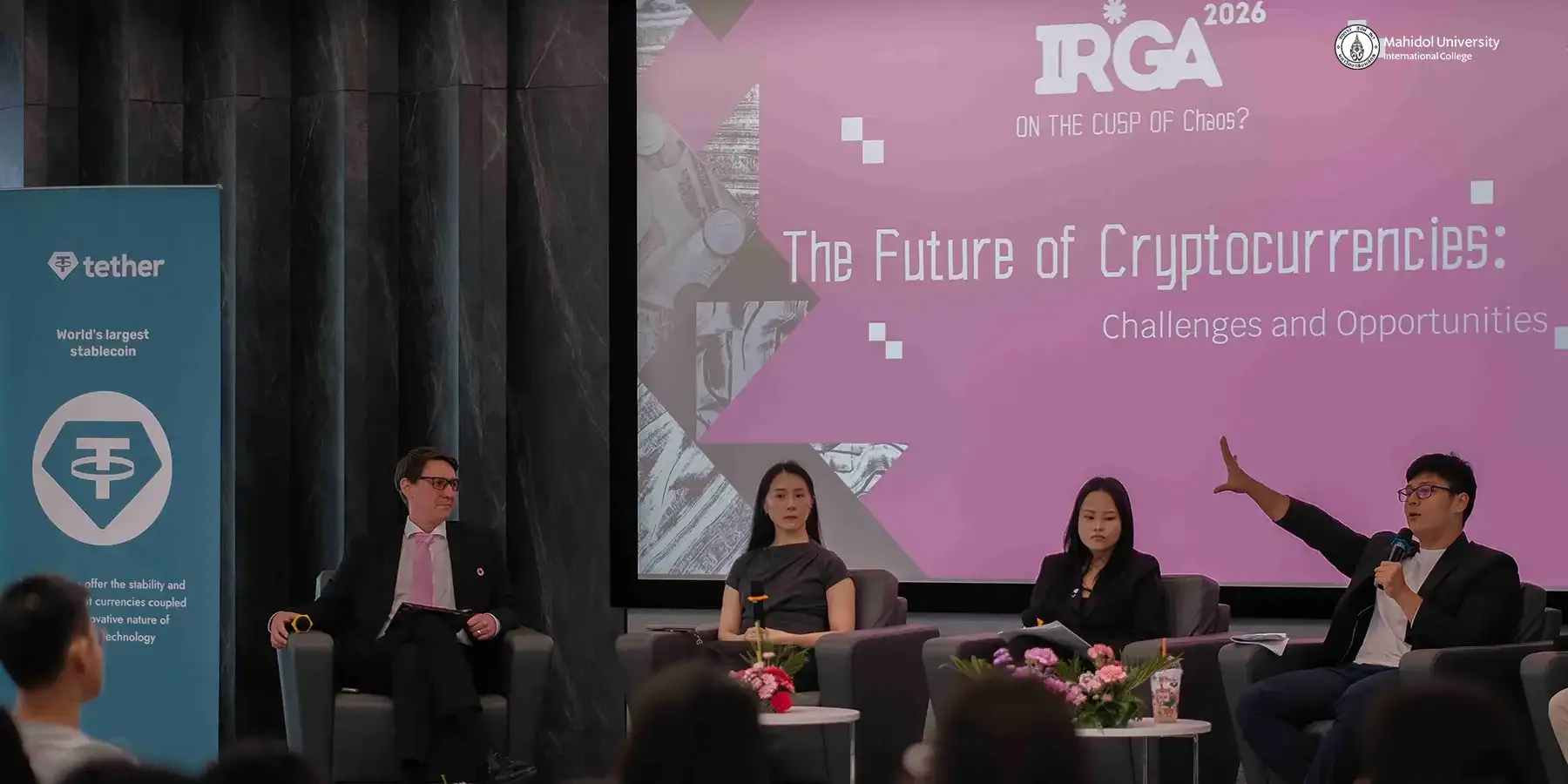
The festival also addressed the impact of cryptocurrency on financial governance (“The Future of Cryptocurrencies: Challenges and Opportunities”), with insights from Mr. Gun Clawvuthinan, APAC Country Manager at Uniswap; Ms. Boonyavee Phlaypan, Thailand/Indochina Country Manager at Tether; and Ms. Tookta Chatchalitwaphong, an international cryptocurrency legal expert.
Hands‑on workshops on digital assets and social justice complemented the panels, with Mr. Gun Clawvuthinan of Uniswap and Dr. Aman Saggu, a lecturer in MUIC’s Business Administration Division, facilitating the “Digital Assets Interactive Training Session.” Meanwhile, Ms. Piyanut Kotsan, human rights strategist and social change facilitator, and Ms. Saksinee Emasiri, youth engagement and participation specialist, led the “From Global Crisis to People Power” workshop.
Organizers said the festival aimed to equip students with practical tools to turn disruption into constructive policy action. Dr. Deekana Tipchanta Kaiser, IRGA Program Director, said: “In IRGA, we try to prepare students for a complicated world. The festival helps by bringing together experts from fields as diverse as cybersecurity, environmental policy, social justice, and finance—reminding students that global challenges rarely stay in neat academic boxes and that the next generation of leaders must learn to connect ideas across disciplines.”